
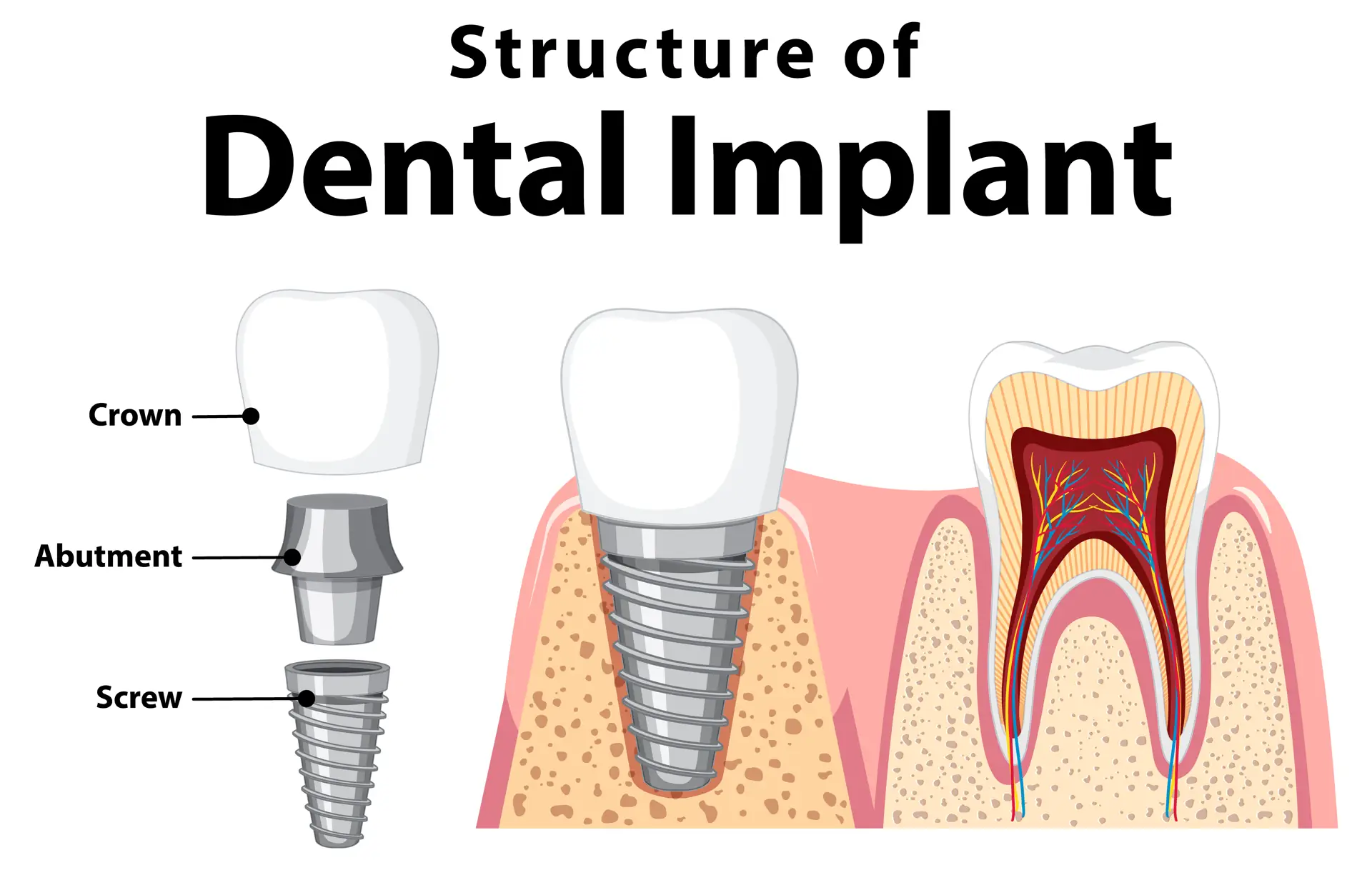
If your dentist recommends a dental implant, you may hear the term implant screw. It is a small but essential part of restoring your smile.
A dental implant screw acts as an artificial tooth root, anchoring in your jawbone and creating a sturdy base for the abutment and new tooth.
A personalized assessment at a Kadıköy Private Dental Clinic can determine whether implant treatment is suitable for your oral health and bone condition.
What Is a Dental Implant Screw?
A dental implant screw, also called an implant fixture, is placed into the jawbone. It replaces the function of a missing tooth root and supports the restoration above the gum.
Most modern implants have a threaded, screw-like design. The threads help the implant engage with surrounding bone during placement and provide primary stability.
A complete implant restoration generally includes:
- Implant fixture: The screw-shaped component placed in the jawbone.
- Implant abutment: The connector attached to the implant.
- Dental implant crown: The visible replacement tooth attached to the abutment.
The implant is not the visible tooth you see in the mirror. Instead, it is the strong foundation hidden beneath your smile.
How Does the Implant Screw Work?
During dental implant surgery, the implant is placed into the jawbone. Once positioned, the surrounding bone gradually bonds with its surface through osseointegration, supporting the next stages of treatment.
This process creates a strong bond between the implant and bone, allowing it to serve as a reliable anchor for the abutment and new tooth.
For many patients, osseointegration takes several months. The exact healing period depends on bone quality, implant location, overall oral health, and the treatment approach.
Why Are Implant Threads Important?
Implant threads are far from decorative. Their design helps the implant grip the bone securely and spread the forces of biting and chewing evenly.
Implants may have different thread patterns, shapes, diameters, and lengths. For example, a tapered implant narrows toward the tip.
Each implant is chosen to match your unique anatomy and treatment plan.
What Materials Are Dental Implant Screws Made From?
Titanium: Titanium is the material most commonly used for dental implants due to its biocompatibility, strength, and established clinical use.
Zirconia: Some implant systems use zirconia, a ceramic material. Zirconia implants may be considered depending on patient needs, anatomy, and restoration.
The best implant material depends on clinical needs. Titanium and zirconia have both been thoroughly researched for performance and results.
What Happens During Dental Implant Placement?
Before placement, the dentist evaluates the teeth, gums, jawbone, and overall oral health. Imaging can help determine available bone and plan implant position.
A dental X-ray and cone beam computed tomography (CBCT) can provide detailed three-dimensional information for treatment planning.
During implant placement, the clinician prepares a carefully sized site in the jawbone and inserts the implant fixture.
The clinician may use a healing abutment or temporary component while the tissues recover before the next stage.
After the implant integrates with the bone, the clinician can connect an abutment and place the final crown, bridge, or denture to complete treatment.
What If There Is Not Enough Jawbone?
A solid foundation is key to successful implant placement. After losing a tooth, the jawbone may shrink, leaving too little bone for the implant to hold onto.
In these cases, your dentist may suggest bone grafting. This procedure adds material where bone is lacking, helping your jaw heal before implant placement.
For some implants in the upper back jaw, a sinus lift may also be considered when the sinus position limits the available bone.
What Are Implant Torque and Stability?
Two technical concepts you may hear during treatment are insertion torque and implant stability.
Insertion torque refers to the resistance encountered when placing the implant into prepared bone. It helps clinicians assess the mechanical stability achieved during placement.
Implant stability matters because the fixture needs to remain secure while osseointegration occurs. Your dentist determines the appropriate placement and loading approach based on your individual clinical situation.
Can an Implant Screw Become Loose?
Although dental implants are designed for long-term function. But yes, complications can occur.
Screw loosening may affect the connection between an implant and its abutment or restoration.
Patients may notice movement, an unusual sensation when biting, or a crown that no longer feels secure.
Other possible technical complications include screw fracture or, less commonly, implant fracture.
Can Gum Disease Affect a Dental Implant?
Yes. Dental implants can develop inflammatory conditions affecting the surrounding gum and bone.
If inflammation progresses and bone around the implant begins to deteriorate, the condition is known as peri-implantitis.
Signs that deserve dental evaluation can include:
- Red or swollen gum tissue
- Bleeding around the implant
- Tenderness
- Changes in the way the restoration feels
- Increasing discomfort
- Visible changes around the implant
How Do You Care for a Dental Implant Screw?
Although the implant itself cannot develop tooth decay, surrounding tissues still need careful attention. Good implant care includes:
- Brush your teeth twice daily using appropriate technique.
- Clean around the implant and restoration as your dentist recommends.
- Attend regular dental checkups.
- Follow professional cleaning recommendations.
- Tell your dentist about any movement, bleeding, swelling, or discomfort.
- Do not wait to seek help if you notice changes around your implant.
Your dentist may recommend specific floss, interdental brushes, or other cleaning tools for implant care.
How Does Tooth Extraction Relate to Dental Implants?
Dental implants are often considered after a tooth has been removed because they can replace the missing tooth root. However, it depends on the extraction site, the bone, the gums, and the overall treatment plan.
In some cases, a dentist can place an implant during the same appointment as the extraction. In other situations, the tissues need time to heal before implant surgery and the next stage of treatment.
Patients recovering from extraction should follow their dentist’s aftercare instructions carefully. If you experience pain after a tooth extraction, it may indicate that you need a professional assessment.
Who May Benefit From Dental Implants?
Dental implants are considered for people who have lost one or more teeth and want a fixed replacement option.
However, suitability depends on several factors, including:
- Available jawbone
- Gum and periodontal health
- Oral hygiene
- Overall health
- Smoking status
- The location of the missing tooth
- The condition of the surrounding teeth
- The patient’s ability to maintain regular dental care
Some patients may need periodontal treatment or bone augmentation before implant placement. Treatment planning is always personalized rather than based on a one-size-fits-all approach.
Frequently Asked Questions
Is a dental implant screw the same as a dental implant?
In everyday conversation, people often use these terms interchangeably.
Technically, the implant screw or fixture is placed into the jawbone, while the complete restoration also includes the abutment and replacement tooth.
How long does an implant screw take to heal?
The implant usually needs time to undergo osseointegration with the surrounding bone. The healing period varies between patients and can take several months. Your dentist will determine when the implant is ready for the next stage.
Can a dental implant screw break?
Implant components can experience mechanical complications, including screw fracture or implant fracture. Proper treatment planning, appropriate component selection, and regular follow-up help clinicians monitor implant stability.
What happens if an implant screw becomes loose?
A dentist should examine any loose implant-related component. The cause could involve the restoration, the prosthetic screw, the abutment connection, or the implant itself. Professional assessment is necessary before deciding on treatment.
Can you get an implant if you have bone loss?
Possibly. Some patients with inadequate bone may benefit from procedures such as bone grafting or sinus augmentation before implant placement. The appropriate approach depends on the amount and location of available bone.
Key Takeaways
- A dental implant screw, or implant fixture, replaces the function of a missing tooth root.
- Titanium is widely used, while zirconia is another option in selected cases.
- Implant threads help provide mechanical engagement with the surrounding bone.
- Osseointegration allows the implant to become integrated with the jawbone.
- The abutment connects the implant to the crown or other restoration.
- CBCT and digital planning can help clinicians evaluate anatomy and plan implant placement.
- Bone grafting or a sinus lift may be needed when bone volume is insufficient.
- Screw loosening, screw fracture, peri-implantitis, and bone loss are possible complications.
- Good oral hygiene and regular professional monitoring are essential for implant health.
Conclusion
A dental implant screw is far more than just a tiny piece of metal. It lays the groundwork for your new tooth, working in harmony with your jawbone, abutment, and final restoration as a complete system.
When you understand the implant fixture, how it bonds with your bone, the materials used, the placement process, and potential complications, you can move forward with confidence.
The right implant and procedure are always tailored to your unique anatomy, oral health, and restoration goals.
A detailed evaluation by a skilled dental professional is the surest way to find out if implants are right for you.
With thoughtful planning, advanced technology, and care tailored to you, we aim to build a strong, comfortable foundation for your smile and oral health.