
You can spot a canine tooth by its pointed shape between the incisors and premolars. This shape helps you grip and tear food.
Its role goes beyond eating. Canines support tooth alignment, jaw movement, facial aesthetics, and a balanced bite.
Most adults have four permanent canine teeth, two in the upper jaw and two in the lower jaw. The upper teeth are called maxillary canines, while the lower ones are mandibular canines.
The upper canine’s long eruption path makes it more susceptible to impaction than other teeth.
Knowing about canine tooth anatomy, how they develop, and common dental issues can help you tell when changes are normal and when you should see a dentist.
What Is a Canine Tooth?
A canine tooth, sometimes called a cuspid or eye tooth, is located between an incisor and a premolar. People usually have one canine in each part of the mouth.
The four permanent canines are designed to grip and tear food. Their strong roots also provide stability within the jaw and help them withstand considerable biting forces.
Their position between the front and back teeth makes them an important part of the dental arch and overall occlusion.
If you are looking for personalized dental care, you may visit a Kadıköy Göztepe dentist for a professional evaluation and treatment.
Canine Tooth Anatomy
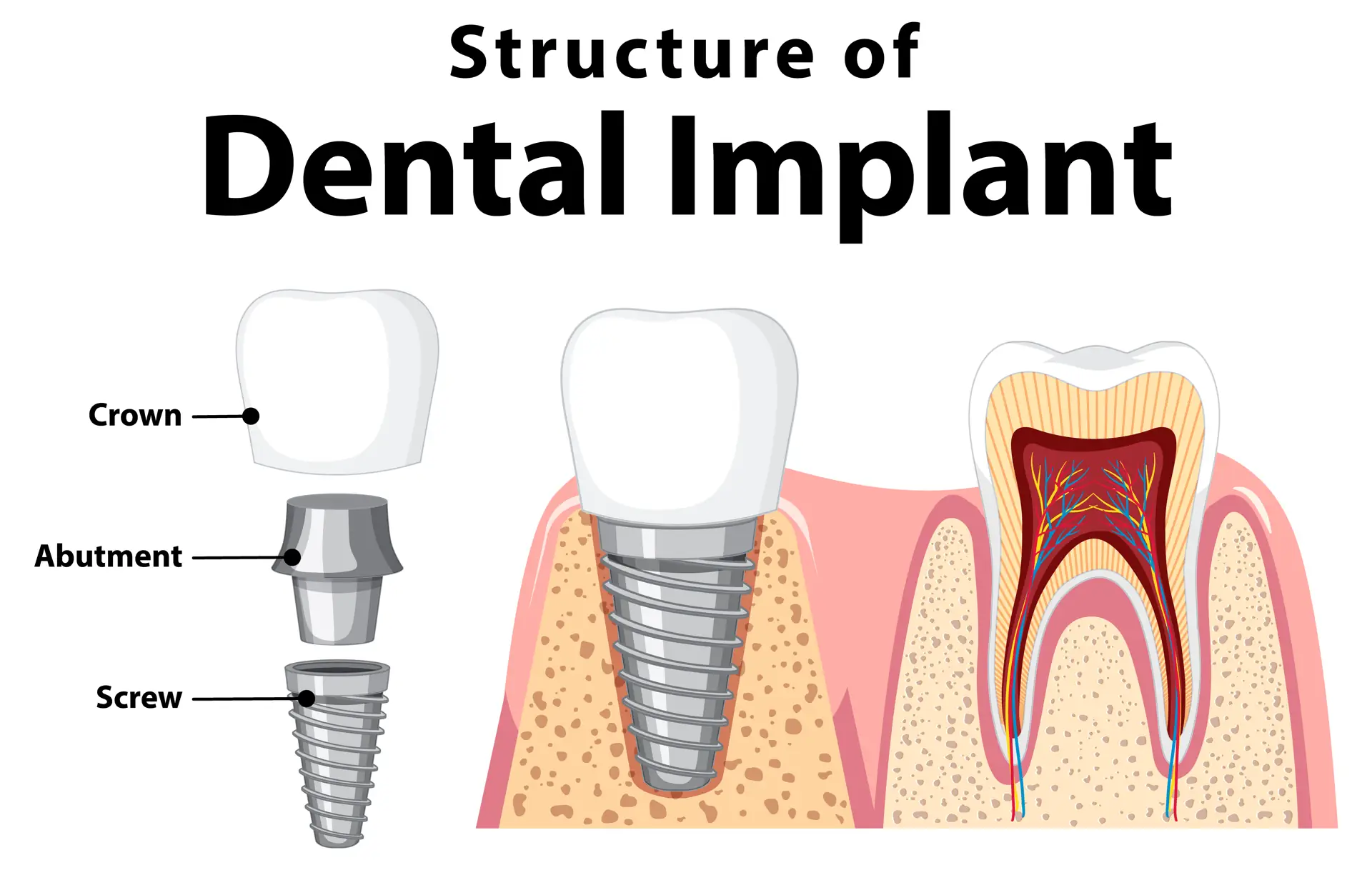
Canine teeth have the same basic parts as other teeth, but their shape and roots are unique.
Crown
The crown is the part of the tooth visible above the gums. It is covered by enamel, which is the hard outer layer that protects the tooth from physical and chemical damage.
The pointed shape of the canine crown makes it particularly effective at gripping and tearing food.
Dentin and Dental Pulp
Beneath the enamel is dentin, a hard tissue that forms most of the tooth. Inside the dentin is the dental pulp, which holds blood vessels, connective tissue, and nerves.
When tooth decay, trauma, or a fracture reaches the pulp, the tooth can become painful or develop an infection.
Root and Supporting Tissues
The root goes into the jaw and holds the tooth in place with the help of the periodontal ligament. Cementum covers the root surface, while the alveolar bone provides the socket that supports the tooth.
The gums, or gingiva, surround the tooth near the gumline and help protect the tissues underneath.
What Does a Canine Tooth Do?
Canine teeth have several important jobs.
They help you:
- Grip and tear food.
- Guide certain jaw movements.
- Maintain spacing between neighboring teeth.
- Support a stable dental occlusion.
- Contribute to the shape of the smile and lips.
All your teeth work as a team, so if one canine has a problem, it can sometimes affect nearby teeth as well.
When Do Canine Teeth Erupt?
Children first get primary canines, often called baby or milk teeth. As they grow, permanent canines replace them.
Permanent upper canines commonly erupt between approximately 11 and 13 years of age, although eruption timing varies from person to person.
The upper canine starts high up in the jaw and takes a longer route to its final spot. This is why upper canines are more likely to have eruption problems than lower ones.
A dentist might monitor a child’s tooth development if a permanent canine appears delayed, especially if the baby tooth is still there or the teeth look crowded.
Why Does a Canine Tooth Become Impacted?
An impacted canine is a permanent tooth that cannot erupt normally because its position or path blocks it from reaching its proper place in the mouth.
Impaction is more common in the maxillary canine than the mandibular canine. Many impacted upper canines develop toward the palate, a condition known as palatal impaction.
Several factors may contribute to impaction, including:
- Insufficient space in the dental arch
- Tooth crowding
- Abnormal tooth position or angulation
- A retained primary canine
- Extra teeth or other obstructions
- Developmental factors
- Other dental abnormalities
An impacted canine may not cause noticeable symptoms. In some cases, however, it can affect nearby teeth or their roots, which is why timely assessment can matter.
How Is an Impacted Canine Diagnosed?
Diagnosis usually begins with a dental exam. Your dentist or orthodontist will check for delayed eruption, unusual tooth positions, baby teeth that haven’t fallen out, or signs of crowding.
Dental X-rays can help determine the canine’s location. A panoramic radiograph provides a broad view of the teeth and jaws, while cone-beam computed tomography (CBCT) provides detailed three-dimensional information.
CBCT can be particularly useful when clinicians need to understand the relationship between an impacted canine and the roots of neighboring teeth.
How Is an Impacted Canine Treated?
Treatment depends on your age, the tooth’s position, available space, root development, and the health of nearby teeth.
Monitoring
If an impacted canine isn’t causing problems, your dentist may watch it over time. Regular check-ups and scans help make sure the tooth stays stable.
Creating Space
If there isn’t enough space for the tooth to erupt, orthodontic treatment can make room. Braces can then help move the canine into the right spot.
Canine Exposure and Bonding
If orthodontics can move an impacted canine, a minor surgery may be needed to uncover the tooth under the gum. Then, a bracket is attached so it can be gently guided into place.
This approach is commonly used for appropriately positioned impacted upper canines and usually requires coordination between surgical and orthodontic care.
Dental Extraction
Sometimes, removing a canine is the best option if it is badly damaged or could harm nearby teeth. The dentist will decide based on your situation.
If removal is being considered, you can learn more in our guide to canine tooth extraction.
Other Problems That Can Affect Canine Teeth
Canine teeth can have many of the same problems as other adult teeth.
Tooth decay: Dental caries can weaken enamel and progress into deeper tooth structures if untreated.
Tooth fracture: An injury, accident, or excessive force can chip or fracture the crown.
Tooth infection: Advanced decay or trauma can damage the dental pulp and may lead to infection.
Gum disease: Plaque around the gingiva can contribute to inflammation and periodontal disease.
Tooth crowding: Limited space can affect the position of a canine and neighboring teeth.
Malocclusion: An abnormal relationship between the upper and lower teeth can influence how canines function during biting and jaw movement.
If your canine tooth is painful, remember the source of discomfort isn’t always obvious. Pain may originate from the affected tooth, neighboring teeth, gums, or another oral structure.
Learn what causes tooth pain, including common reasons for dental pain and when professional assessment may be appropriate.
How Can You Protect Your Canine Teeth?
Daily dental care helps keep your canines healthy for life.
According to the American Dental Association(ADA), brush your teeth twice a day for two minutes with fluoride toothpaste, and clean between your teeth regularly. A soft-bristled toothbrush and gentle brushing help remove plaque without hurting your gums.
You should also:
- Avoid using your teeth to open packages.
- Avoid biting very hard objects.
- Limit frequent sugary snacks and drinks.
- Watch for changes in tooth position.
- Attend routine dental examinations.
- Seek professional advice for persistent pain or swelling.
For kids and teens, regular dental check-ups are especially helpful for monitoring tooth growth and spotting any delays in canine development.
FAQs About Canine Teeth
How many canine teeth do adults have?
Most adults have four permanent canine teeth, two in the upper jaw and two in the lower jaw.
Why are canine teeth pointed?
Their pointed crown helps them grip and tear food. Their position also helps with certain jaw movements and the overall function of the bite.
At what age do permanent canine teeth erupt?
Permanent upper canines commonly erupt between approximately 11 and 13 years of age. Individual eruption timing can vary.
Is an impacted canine always painful?
No. An impacted canine may cause no obvious symptoms. A delayed eruption or retained baby tooth can sometimes be the first indication that further examination is needed.
Can an impacted canine be saved?
In many suitable cases, orthodontic treatment can guide an impacted canine into the dental arch, sometimes following surgical exposure and bonding. However, not every impacted tooth is suitable for alignment.
Can a canine tooth need root canal treatment?
Yes. If decay, trauma, or another problem damages the dental pulp, root canal treatment may be considered when enough healthy tooth structure remains to restore the tooth.
Key Takeaways
- Canine teeth sit between the incisors and premolars.
- Adults normally have four permanent canines.
- Maxillary canines generally erupt around ages 11 to 13.
- Upper canines have a long, complex eruption path.
- Impacted canines may develop toward the palate, lip, or cheek.
- Tooth crowding and abnormal eruption paths can contribute to impaction.
- Dental X-rays help assess tooth position, while CBCT may provide additional three-dimensional information when needed.
- Orthodontic treatment, along with canine exposure and bonding, can help position impacted teeth appropriately.
- Decay, fractures, infection, gum disease, and malocclusion can affect canine teeth.
- Regular dental care helps identify eruption and oral health problems early.
Conclusion
Canine teeth are important for both the appearance of your smile and the function of your mouth. Their pointed shape helps you grip and tear food, and their strong roots help keep your teeth stable and guide your jaw.
Most canine teeth grow in without problems. But sometimes, delays, crowding, impaction, decay, fractures, or infection can cause issues that need a dentist’s attention.
When dentists and orthodontists identify an eruption problem early, they can evaluate the tooth’s position and surrounding structures and determine whether monitoring, orthodontic treatment, surgical exposure, restoration, or extraction is appropriate.
At Senkrondent, we believe dental care should be clear and tailored to you. A dental check-up can help you understand what’s going on and which treatments might work best for you.